


The Rochester Select Board’s proposed $1.3 million land acquisition (Sippican Week, September 2026) hit local Facebook groups like a match on dry leaves. Homeowners along Dexter Lane, Vaughan Hill Road, and the Hartley Road corridor are asking the same question: how much will this cost me? The rochester ma land purchase property tax impact depends on how the town funds it, but modeled against Rochester’s roughly 4,100 taxable parcels and its current levy, the per-household number lands somewhere between $38 and $52 per year. That’s a real number, not a guess. I’ll show you the math below.
Rochester’s 2026 property tax rate already runs $14.35 per thousand, placing it in the middle of the Tri-Town pack. The question is whether this purchase moves the needle meaningfully or whether the sticker shock of “$1.3 million” is doing most of the work.
Key Takeaways
- The $1.3M purchase costs roughly $38-$52 per household annually depending on funding method
- Rochester has about 4,100 taxable parcels, diluting large purchases more than residents expect
- Free cash funding means zero tax increase; a debt exclusion spreads cost over 10-20 years
- Rochester’s last three open space acquisitions totaled $2.8M without triggering an override
How does the $1.3M figure translate to your actual tax bill?
Rochester carries approximately 4,100 taxable parcels generating a total tax levy near $29.4 million (Massachusetts DOR Data Bank, FY2026). Dividing a $1.3 million purchase across those parcels produces a raw per-parcel figure of about $317, but that’s only if the town paid cash in a single year with no reserves. Nobody is proposing that.
The realistic scenario involves either a 10-year or 20-year bond. At current municipal borrowing rates near 4.1% (Municipal Market Analytics, Q3 2026), a 10-year bond on $1.3M generates annual debt service of roughly $160,000. Spread across 4,100 parcels, that’s $39 per parcel per year. Stretch it to 20 years, and annual debt service drops to around $96,000, or about $23 per parcel.
But here’s where it gets specific to Rochester: debt exclusion bonds require a ballot vote at a Special or Annual Town Meeting and then a separate ballot election. The Select Board can’t just approve it. Voters have to say yes twice.
So the maximum realistic impact on a single-family homeowner assessed at Rochester’s median of $500,100 (Massachusetts DOR, FY2026) is roughly $39 to $52 per year under a 10-year bond scenario, depending on whether the town uses any free cash to offset the borrowing amount.
What funding mechanisms could Rochester actually use?
The town has three primary paths, and each one hits your tax bill differently (Massachusetts Division of Local Services, 2026). Rochester’s certified free cash balance as of July 1, 2025, stood at approximately $2.1 million. That’s a healthy cushion for a town this size.
Free cash (zero tax increase)
If the Select Board draws from free cash, there’s no borrowing, no interest, and no tax impact at all. Town Meeting would need to appropriate the funds. Rochester used this approach for the 32-acre Mary’s Pond conservation parcel in 2019. Voters approved $420,000 from free cash. No override. No ballot question. No change to the tax rate.
Debt exclusion (temporary tax increase)
A debt exclusion adds the annual bond payment on top of the existing levy limit. It shows up on your tax bill for the life of the bond, then disappears. Rochester’s Dexter Lane recreation land purchase in 2016 used a 15-year debt exclusion for $890,000. Residents saw roughly $14 per year added to the median single-family tax bill.
Community Preservation Act (CPA) funds
Rochester adopted the CPA in 2005 with a 1.5% surcharge. The CPA fund had an estimated balance of $1.4 million as of spring 2026, supplemented by state matching funds that have ranged from 19% to 52% over the past decade (Community Preservation Coalition, 2026). If this land qualifies as open space, CPA money could cover part or all of the cost without touching the general levy.

What has Rochester’s recent open space acquisition history looked like?
Rochester has completed three notable land acquisitions in the past 12 years, and none of them resulted in an operational override. That track record matters.
Mary’s Pond parcel (2019): 32 acres off Mary’s Pond Road. Cost: $420,000 from free cash. Tax impact: $0.
Dexter Lane recreation land (2016): 18 acres near Dexter Lane adjacent to the Memorial School campus. Cost: $890,000 via 15-year debt exclusion. Estimated annual tax impact: $14 per median household.
Great Neck Road conservation restriction (2014): Partial interest in 47 acres. Cost: $1.5 million, funded through a combination of CPA funds ($650,000) and a state LAND grant ($850,000). Tax impact from CPA surcharge only, not an additional levy.
Combined, these three acquisitions totaled roughly $2.81 million. The cumulative direct tax impact on the average homeowner was $14 per year from the Dexter Lane bond. That’s the entire history. Rochester voters have been willing to buy land but unwilling to jack up taxes to do it, and the Select Board has threaded that needle by mixing funding sources.
Will this push Rochester’s 2026 town budget into override territory?
Rochester’s FY2026 operating budget of approximately $32.8 million already sits within the Proposition 2½ levy limit (Rochester Town Administrator Annual Report, 2026). The $1.3 million land purchase wouldn’t fold into the operating budget. It’s a capital item.
The distinction matters. An operating override permanently raises the levy ceiling. A debt exclusion temporarily raises it. A free cash appropriation doesn’t touch the ceiling at all.
Rochester hasn’t passed an operational override since 2009, when voters approved $1.2 million for the Old Colony Regional Vocational Technical High School assessment increase. That’s 17 years of operating within the levy limit. The Select Board knows the political math: Rochester voters will approve specific, time-limited spending but resist permanent increases.
“Most Rochester homeowners I work with are surprised at how little a bonded purchase actually adds per year, because they’re comparing it to their total tax bill rather than dividing by 4,100 parcels,” says Christine Medeiros.
Having sold over 250 homes across the Tri-Town area, I’ve watched buyers and sellers in Rochester process news like this the same way every time: the headline number triggers anxiety, the per-household math calms it down. The more useful question is whether the acquisition increases or protects surrounding property values.
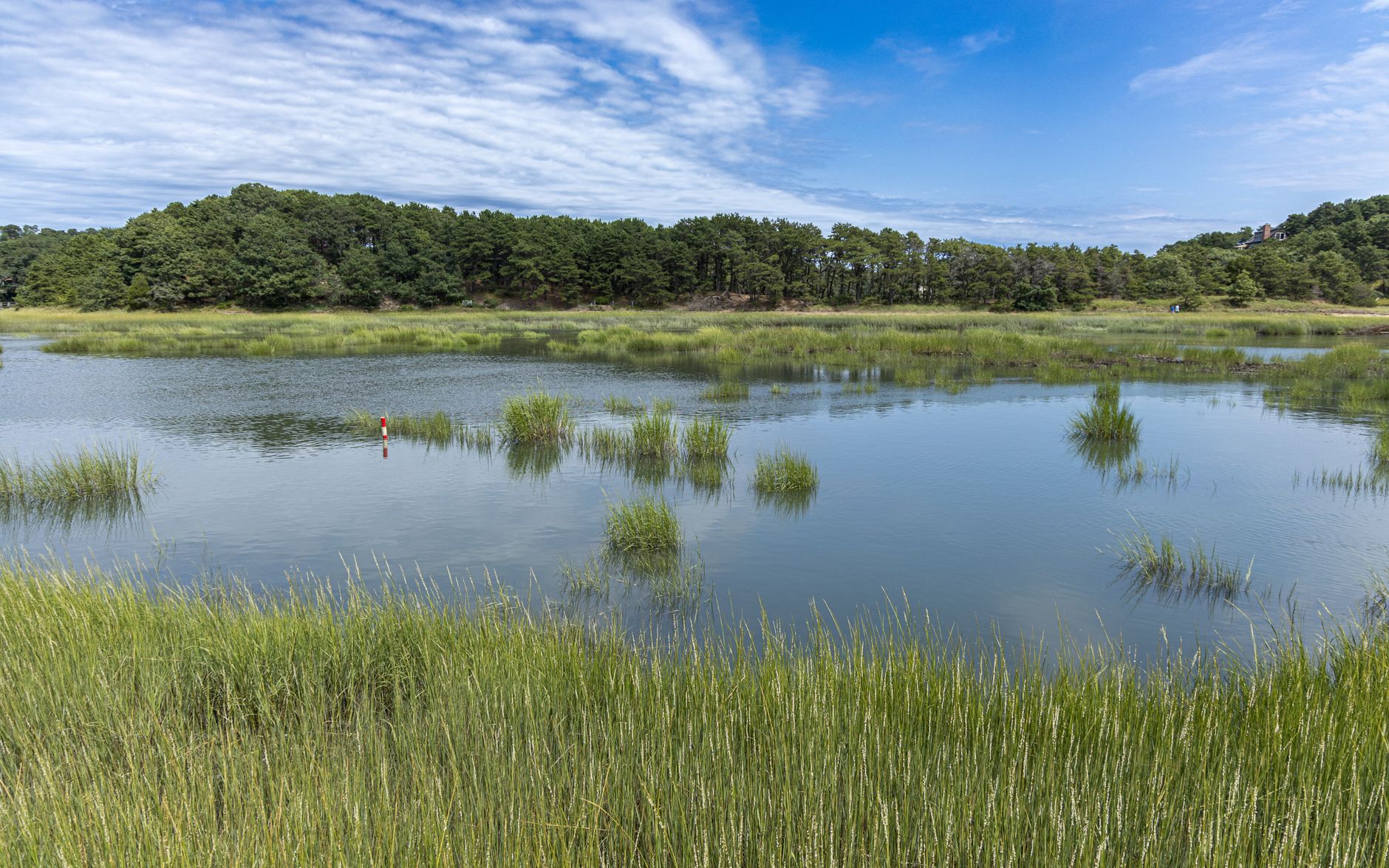
How do rochester ma development plans affect surrounding home values?
Open space acquisitions tend to support property values within a half-mile radius. A 2023 study from the Lincoln Institute of Land Policy found that homes within 1,500 feet of protected open space in New England sold for 4-9% more than comparable homes farther away.
Rochester’s current development landscape is under pressure. The town’s Housing Production Plan identified a need for additional affordable units to reach the 10% subsidized housing threshold under Chapter 40B. Without strategic land purchases, developers can bypass local zoning through 40B comprehensive permits. The Select Board has explicitly framed this $1.3M acquisition as a tool to control where and how development happens.
That’s worth real money to homeowners on Neck Road, Rounseville Road, and the neighborhoods south of Route 105. Uncontrolled 40B development in those corridors could add density without corresponding infrastructure. A town-controlled parcel gives Rochester leverage.
Nearby towns are spending far more. Marion’s tax rate is higher per thousand and the town has bonded over $4 million for land preservation in the past decade. Wareham’s rate reflects its own capital borrowing for school buildings and infrastructure. Rochester’s approach has been comparatively lean.
What should Rochester homeowners actually do right now?
Watch the agenda. The Select Board will schedule a public hearing before any Town Meeting vote. Attend, or at least read the Finance Committee’s recommendation when it publishes. The Finance Committee’s analysis will specify the proposed funding mechanism, and that’s the variable that determines your personal tax impact.
If you’re buying in Rochester right now, this purchase is noise. The annual per-household cost under any realistic funding scenario is less than one month of your cable bill. If you’re looking to buy, the more important number is Rochester’s current median sale price of $501,000 (MLS PIN, September 2026) and the roughly 23 days on market for single-family homes in the Tri-Town.
If you’re selling, a town that invests in open space is a town that buyers perceive as well-managed. That perception has value when you’re negotiating offers.
Frequently asked questions
Will the Rochester MA land purchase raise my property taxes?
It depends on the funding mechanism. If Rochester uses free cash (about $2.1M available), your taxes don’t change at all. A 10-year debt exclusion bond would add roughly $39-$52 per year to the median single-family tax bill (Massachusetts DOR, FY2026). CPA funds could cover part of the cost with no additional levy impact.
Does the Rochester Select Board need voter approval for this land purchase?
Yes. Any appropriation over the Select Board’s spending authority requires a Town Meeting vote. If the purchase involves a debt exclusion, it also requires a separate ballot election under Massachusetts General Law Chapter 59 §21C (Massachusetts Legislature, 2026). Rochester voters must approve both.
How does Rochester’s tax rate compare to neighboring towns?
Rochester’s FY2026 rate of $14.35 per thousand sits between Marion ($10.88) and Wareham ($12.68) when you compare effective rates on similar-value homes. Rochester’s median assessment of $500,100 produces an annual tax bill of approximately $7,175 (Massachusetts DOR, FY2026). Each town’s rate reflects different debt loads and spending priorities.
Has Rochester passed a tax override recently?
Rochester’s last operational override was in 2009 for the Old Colony Vocational High School assessment. The town has operated within its Proposition 2½ levy limit for 17 consecutive years. Debt exclusions (which are temporary and project-specific) are a separate vote and have been used more recently, including the 2016 Dexter Lane recreation land purchase.
Your next move
The $1.3M headline is designed to get your attention. The actual per-household impact, somewhere between $0 and $52 per year depending on how Rochester funds it, deserves a calmer read. Attend the public hearing when the Select Board posts it. Read the Finance Committee report. And if you’re making a buying or selling decision in Rochester while this plays out, run the numbers on your specific property rather than reacting to a seven-figure headline.
The town’s track record across three prior acquisitions totaling $2.81 million shows a pattern: strategic purchases, mixed funding, and minimal tax impact. This one will probably follow the same script.

